
Animal Art Lessons for Kids: Drawing Australia's Most Loved Animals
Jun 03, 2026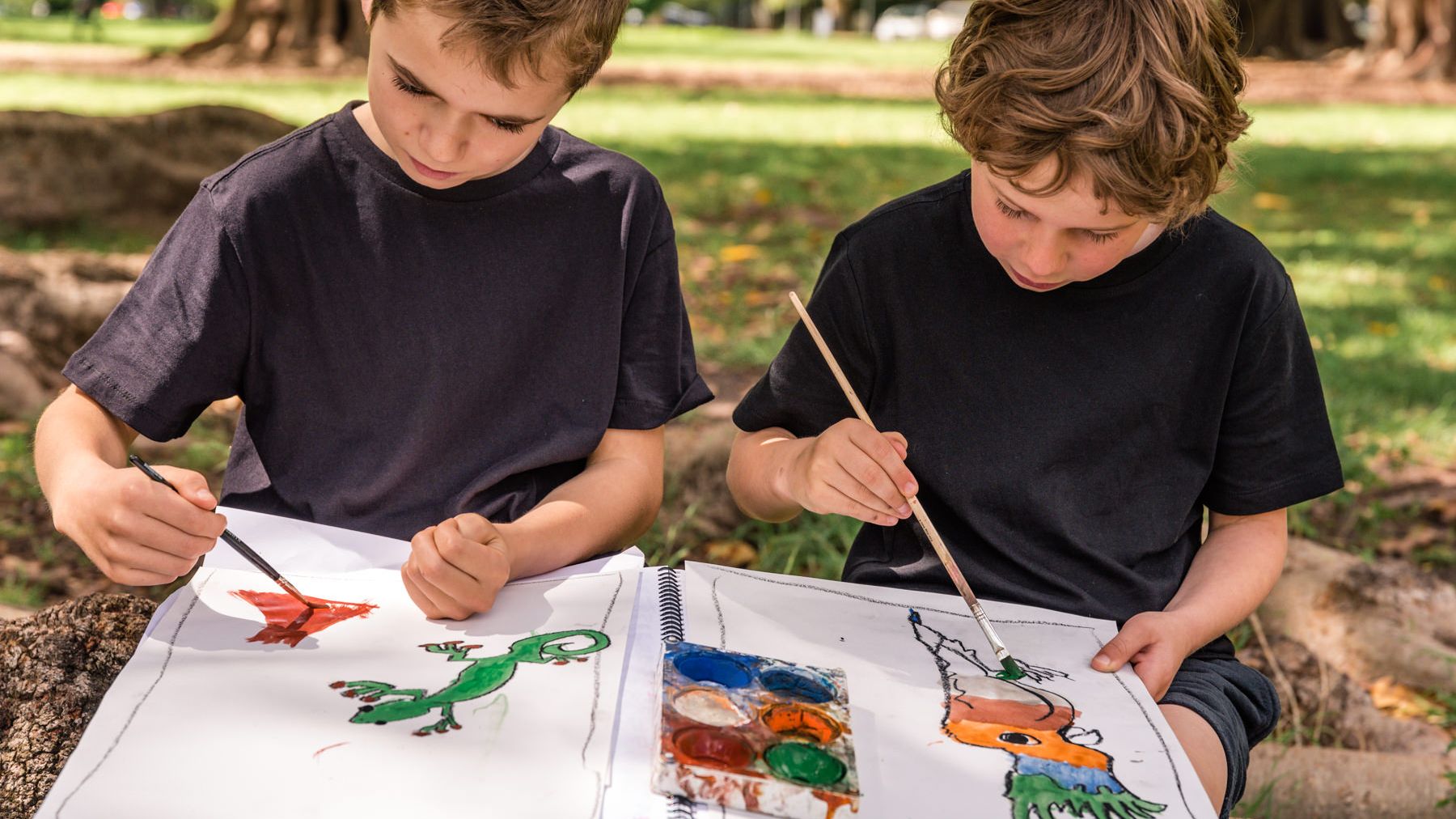
Animals are one of the most natural starting points for children learning to draw. They're familiar, they're full of character, and every animal offers something different — interesting shapes, unique textures, expressive faces.
For children aged 4–12, animal art lessons build confidence in a way that abstract exercises rarely do. When a child draws a koala and it actually looks like a koala, something clicks. They feel capable. They want to keep going.
Here's a guide to drawing some of Australia's most loved animals — plus a few tips to help children get the most out of every lesson.
Why animals make the best subjects for kids learning to draw
Animals are patient subjects. Unlike people (where a wonky eye can feel like failure), animals carry their quirks beautifully. A lopsided ear on a koala just makes it more endearing. A slightly off-centre stripe on a tiger still looks like a tiger.
Animals also give children natural entry points:
- Simple shapes first. Most animals start with ovals, circles and basic outlines that even young children can manage.
- Lots of detail to add. Older children can go deeper — adding fur texture, background habitat, pattern and colour.
- Personal expression. Every child's animal looks slightly different, and that's the whole point.
Australian animals to draw — and what makes each one special
The Koala
Round, soft and unmistakably Australian. Start with a large circle for the head, add big fluffy ears, a wide oval nose and small round eyes. The body can be simplified to a pear shape sitting in a fork of a gumtree. Koalas are wonderfully forgiving — no part of the drawing needs to be precise to look right.
Artventure has multiple koala lessons across different age groups and styles.
The Kangaroo
One of the most recognisable silhouettes in the world. The key is getting the pose — a kangaroo standing upright has a distinctive lean, with powerful back legs and small front paws held close. Start with the basic body shape before adding the long tail for balance and the characteristic large ears.
A great lesson in proportion and posture for children aged 6 and up.
The Platypus
One of nature's most surprising animals — and a genuinely fun drawing challenge. The duck-like bill, beaver tail and small rounded body make for an unusual combination of shapes that children find both funny and fascinating. A good entry point for discussing why the platypus is such a unique Australian animal.
The Sea Turtle
Turtles are a favourite across all ages. The shell is the heart of the drawing — start with an oval, then add the pattern of plates across the top. The flippers fan out from the body in smooth curves. Children can spend as much time as they like adding colour and detail to the shell pattern.
Artventure's 10 Ocean Creatures collection includes a sea turtle lesson alongside nine other ocean animals.
The Rainbow Lorikeet
Bright, bold and full of colour — the Rainbow Lorikeet is one of Australia's most joyful birds to draw and paint. Start with a simple bird body and wing shape, then let the colour do the work. Children can practise colour mixing and painting technique while creating something genuinely beautiful.
The Rainbow Lorikeet also features in Artventure's Mindful Moments collection, where it represents Gratitude.
The Wombat
Sturdy, low to the ground, with a wide head and small rounded ears. Wombats are easier to draw than they look — the compact body shape is very manageable for younger children. A good introduction to drawing an animal with a sense of weight and solidity.
The Echidna
Spines, a long snout and small beady eyes — the echidna is distinctive and fun to draw. The spines give children a chance to practise repeated mark-making, which builds pen and pencil control. Each spine can be slightly different in length and direction, which means there's no wrong way to do it.
The Kookaburra
Australia's most famous bird call belongs to a bird with a wonderfully characterful face. The large head, strong beak and upright posture make the kookaburra a satisfying drawing subject. Children can focus on capturing the expression — kookaburras always look like they know something you don't.
Tips for drawing animals with kids at home
Start with observation. Before picking up a pencil, spend a moment really looking at the animal. What shapes can you see? Where are the eyes in relation to the ears? How big is the head compared to the body? Children who look carefully draw better.
Break it into shapes. Every animal is made of simpler shapes. A koala is circles and ovals. A kangaroo is triangles and curves. Help your child find the shapes before they start drawing — it makes the whole thing feel much more manageable.
Don't rush the colouring. Many children want to colour in immediately. Encourage them to finish the pencil outline first, check it, and then add colour. The final artwork will be more satisfying.
Let them add their own touches. The best children's artworks have something unexpected in them — a background, an extra detail, a colour choice that's entirely their own. Encourage this rather than correcting it.
Mistakes are part of it. A smudged line or a proportion that's slightly off doesn't ruin a drawing. It teaches a child to keep going and find their way through. That's one of the most important things art can teach.
Animal art lessons at Artventure
Artventure is an Australian online art lesson library with hundreds of step-by-step video art lessons for children aged 4–12. Animals are one of the most popular subjects in the library — from Australian wildlife to ocean creatures, farm animals, insects, birds and more.
Every lesson is taught by Australian art educator Kirsty Shadiac, who guides children through each drawing or painting step by step, at a calm and encouraging pace. Children can pause, rewind and revisit any lesson whenever they like.
Your child can draw this. Try a free Artventure Starter Lesson today — Rainbow Weather is waiting, and it's a beautiful place to begin. No credit card needed.
Start your free Starter Lesson →
Kirsty Shadiac is an Australian artist, educator and the creator of Artventure — an online art lesson library for children aged 4–12.
