
How to Teach Art to Kids at Home (Even If You're Not Artistic)
Jun 30, 2026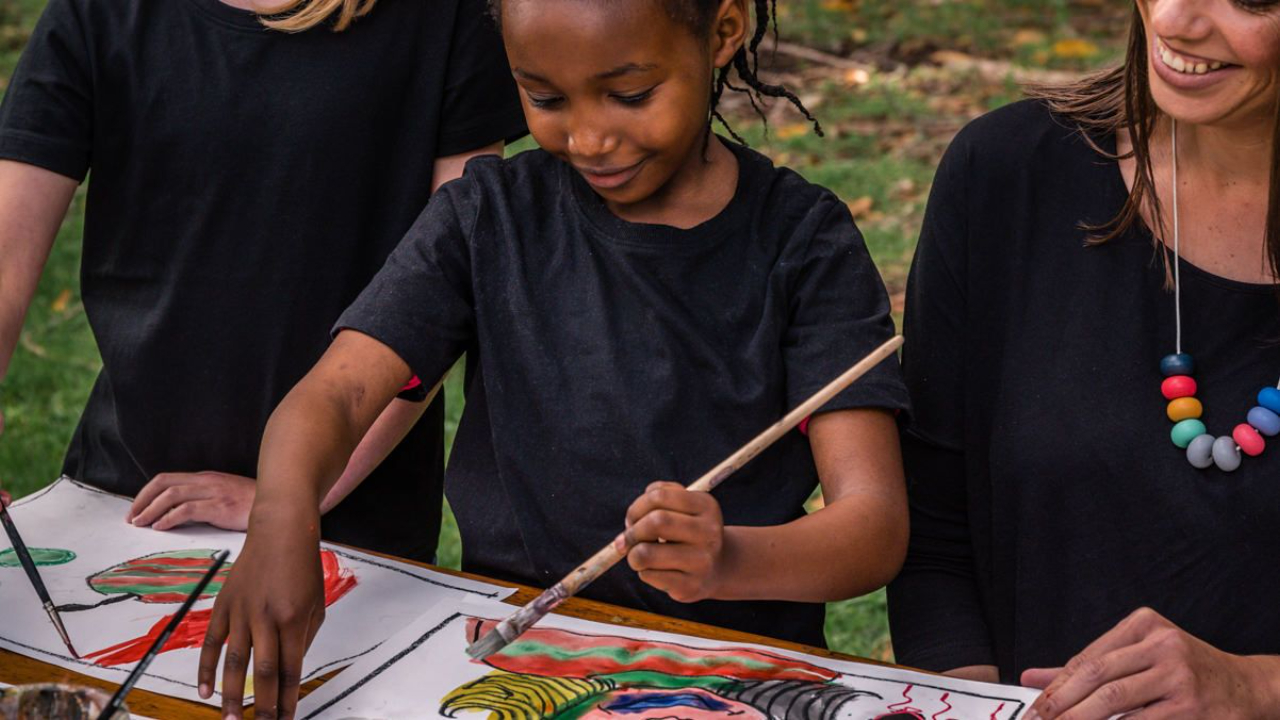
If you've ever thought "I can't even draw a stick figure — how am I supposed to teach my child art?", you're in very good company. It's one of the most common worries we hear from parents, and from plenty of classroom teachers too.
Here's the reassuring truth: you don't need to be an artist to give a child a rich, confident creative life. You don't need to know how to shade a sphere, mix a perfect green, or explain perspective. What a child actually needs is the time, the encouragement, and a little structure — and all of that is well within reach, whatever your own art skills look like.
Whether you're a parent setting up art at the kitchen table, a homeschooling family building a weekly rhythm, or a teacher looking for calmer art lessons, here's a simple, sustainable way to make art a real part of your week.
You don't need to be artistic — you need to make space for it
The biggest myth about teaching art is that you have to be good at art first. You don't. Your job isn't to be the expert at the front of the room. Your job is to create the conditions where a child feels free to have a go.
That means a few things, and none of them require talent:
- Letting "wrong" exist. The fastest way to switch a child off art is to correct it. The goal is exploration, not accuracy.
- Sitting alongside them. You don't have to lead. Drawing badly next to your child, cheerfully, teaches more than a perfect demonstration ever could.
- Valuing the process over the picture. The thinking, the choices, the focus — that's the learning. The finished artwork is a lovely by-product.
Once you stop seeing yourself as the teacher who has to know, and start seeing yourself as the person who makes art possible, the pressure lifts.
Start with what you already have
You don't need a cupboard full of supplies to begin. A few sheets of paper, some pencils, and whatever's already in the drawer is genuinely enough to start this week.
Open-ended materials — the kind a child can use however they like — do more for creativity than expensive kits with one "right" outcome. And a surprising amount can be made at home for next to nothing.
Some of our other blogs might be of interest to you:
Keep it accessible, keep it simple, and let the supplies stay out where they invite use.
Make it a gentle routine, not a big event
This is the part that keeps art going long-term: small and regular beats big and occasional.
A short, calm session each week — fifteen or twenty unhurried minutes — builds far more creative confidence than an elaborate project you only attempt once a term and quietly dread. It's also far kinder to a busy household or a full teaching week.
A predictable rhythm ("art happens on a Friday afternoon") takes the decision-making out of it. No planning panic, no pressure. Just a quiet, dependable slot where creating is allowed to happen.
Follow the child, not the outcome
When you do sit down together, resist the urge to steer toward a particular result. Ask open questions instead of giving instructions:
- "What could happen next?"
- "What does this colour remind you of?"
- "Tell me about what you've made."
Children who feel trusted to make their own choices stay curious for longer. The ones who feel watched and judged tend to decide, early, that they're "not arty" — and that belief is hard to undo.
Let a guided lesson do the teaching for you
Here's where many parents and teachers get stuck. You're happy to make space and follow the child — but sometimes you want a bit of actual teaching. A real skill, a step-by-step, a sense of progress. And that's exactly the part that feels out of reach when you're not artistic yourself.
This is what a good guided lesson is for. With a clear, video-led lesson, the teaching is already done. Your child is taken through it step by step by an experienced art teacher — which means you don't have to know how to draw the thing yourself. You just press play, set out the materials, and let your child follow along. You're free to potter nearby, join in, or sit with them — without ever being the expert.
That's the whole idea behind Artventure. Our lessons are designed for exactly this: a calm, confidence-building art education that doesn't depend on the grown-up being an artist. Younger children have their own lessons, and older kids and teens have lessons pitched at their level, all sitting in one library you can dip into whenever it suits your week.
The easiest way to see whether it fits your family or classroom is to try one. Our Starter Lesson is free, so you can do a complete lesson start to finish before deciding anything.
Try a free Starter Lesson with Artventure.
A note for teachers and home educators
If you're teaching a group — a class, a co-op, a couple of kids of different ages — the same principle does a lot of heavy lifting. A single guided lesson can carry a whole session: everyone follows the same steps at their own pace, and you're freed up to move around, encourage, and support rather than stand at the front demonstrating.
It also takes the planning off your plate, which matters when art is one of many subjects you're responsible for. Lessons are built with the Australian classroom in mind, so they sit comfortably alongside how visual art is already taught here.
Creating a Primary Visual Arts Curriculum for Home or Classroom
A simple plan you can start this week
If you take nothing else from this, take these four small steps:
- Set a regular slot. Pick one calm time a week and protect it.
- Put out simple supplies. Paper, pencils, whatever you have — kept where they're easy to reach.
- Follow the child. Ask questions, welcome mess and mistakes, value the process.
- Lean on a guided lesson when you want structure. Let the teaching be done for you, so you can simply be there.
You don't have to be an artist. You just have to make room for art — and let something dependable carry the rest.
Ready to begin? Try a free Starter Lesson and see how it feels — no art skills required.
